OEM Air Fryer with Window Manufacturer
Denocook manufactures air fryers with cooking windows from 4 to 9 litres, with seven live models: 4 L and 6 L window platforms, a 7 L fully transparent model with rear convection, an 8 L touch-LCD window model, a 9 L dual-basket window model at 2400 W, plus a 6 L glass-bowl design that makes the whole cooking chamber visible. Windows turn cooking into a demo, which lifts listing conversion and in-store engagement. All models are open for OEM programmes.
Models (7)
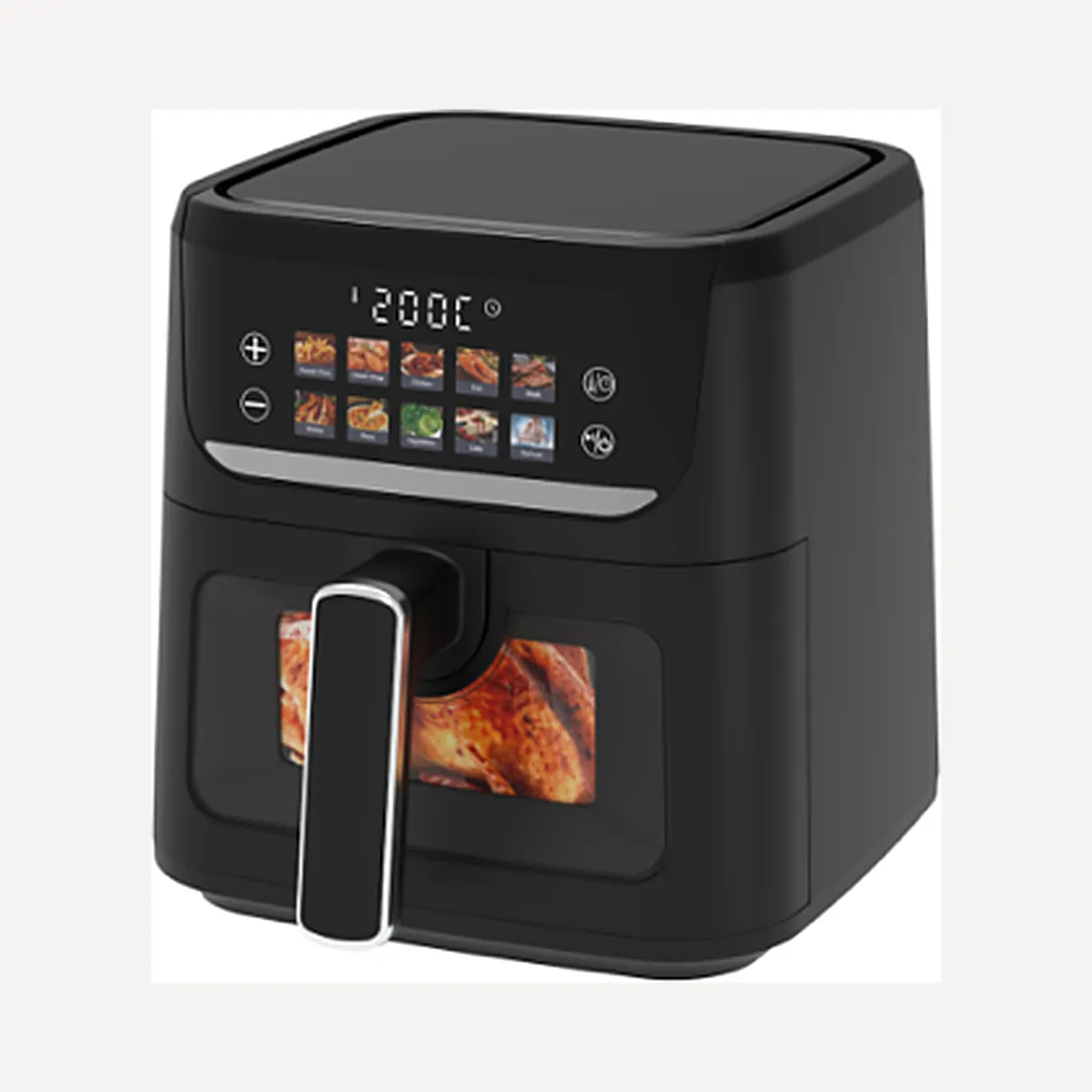
4L Air Fryer with Cooking Window (HTAF-401AP-1)
4-litre digital air fryer with a cooking window, 1300 W, 80–200 °C. Window models are a fast-growing retail segment.
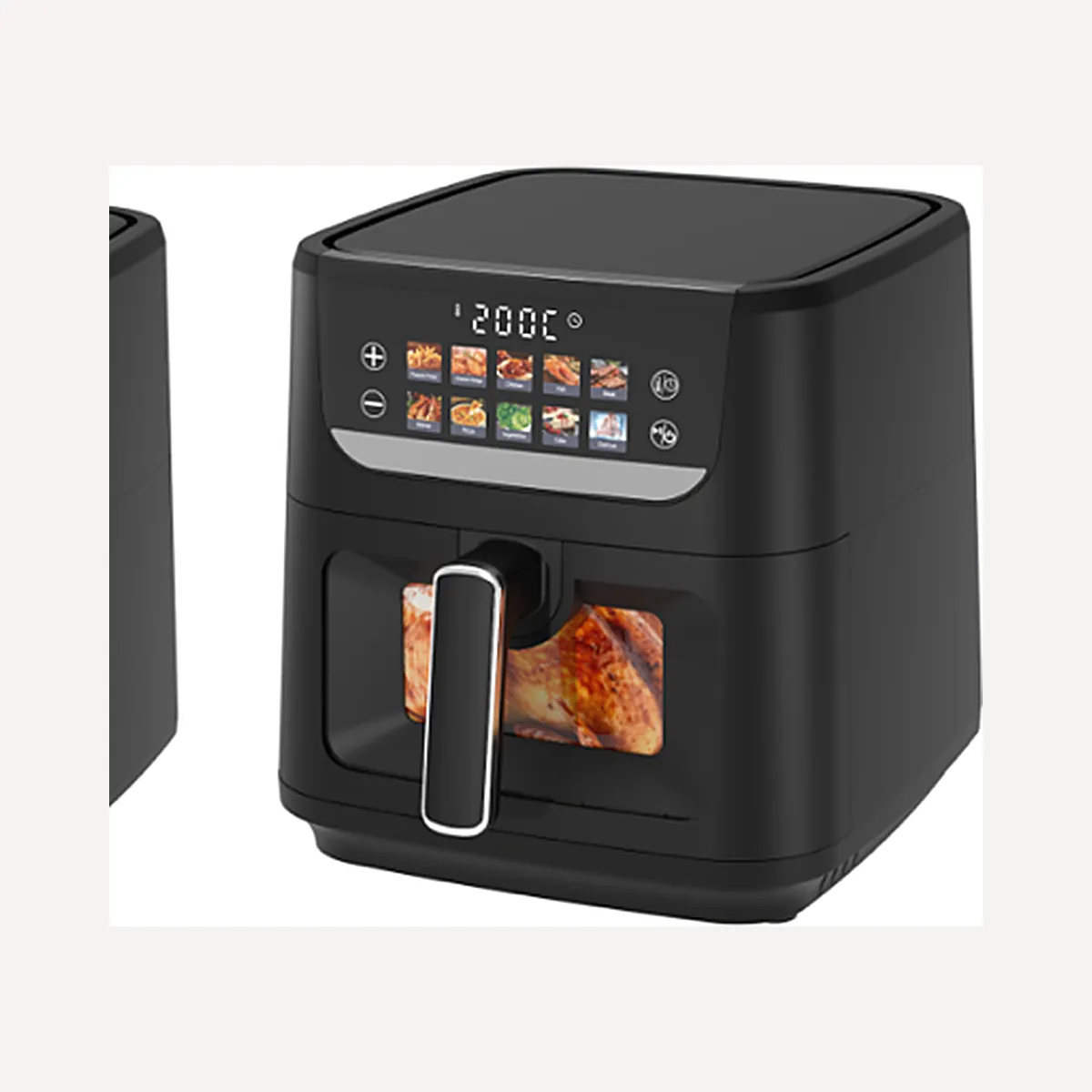
6L Air Fryer with Cooking Window (HTAF-601AP-1)
6-litre digital air fryer with cooking window, 1500 W, 80–200 °C. Family size plus visible cooking in one SKU.
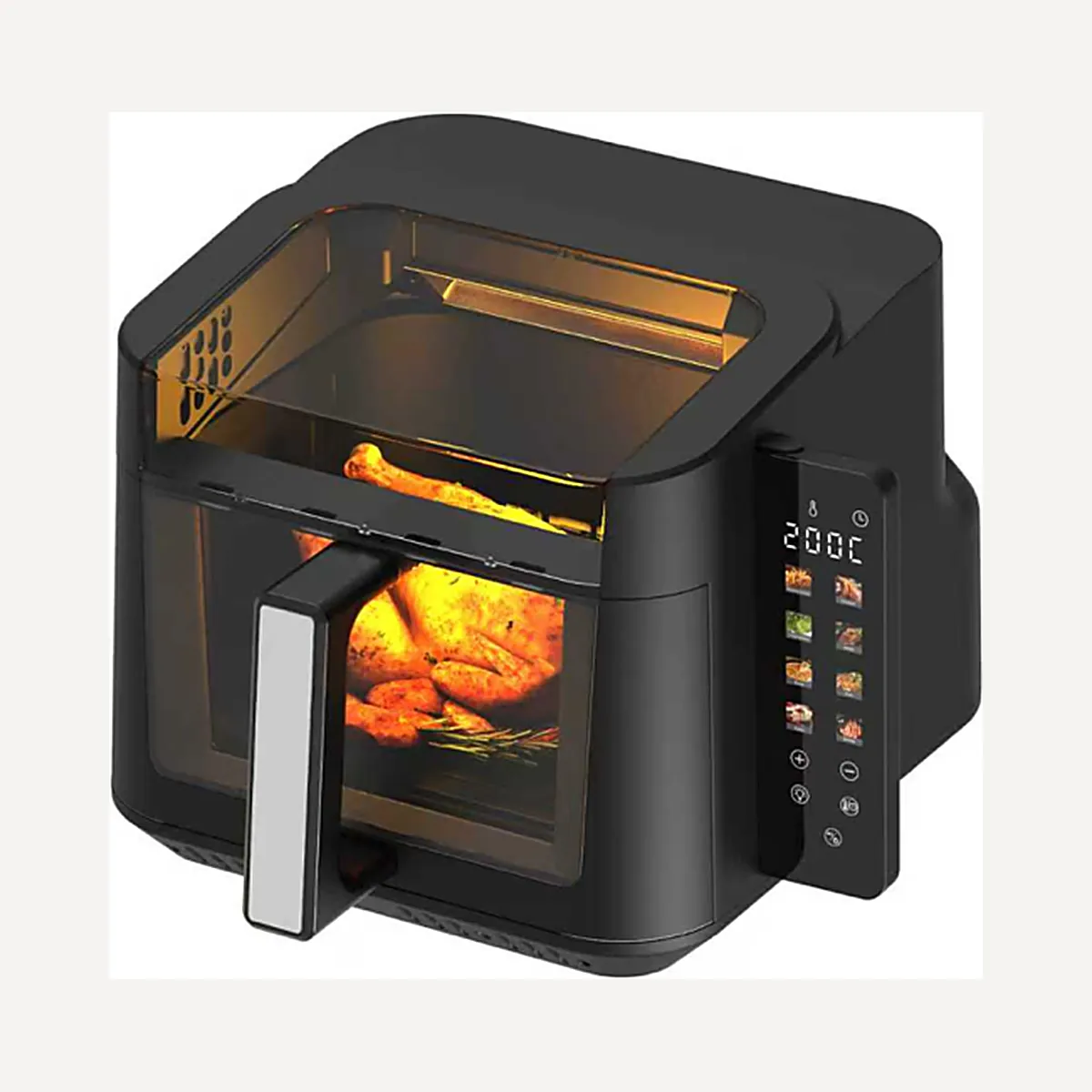
7L Air Fryer with Transparent Window (HTAF-655AP-D / HTAF-656AP-D)
7L Air Fryer with Transparent Window: 7 L, 1500 W, 1480 pcs per 40HQ. For OEM and private label programmes.
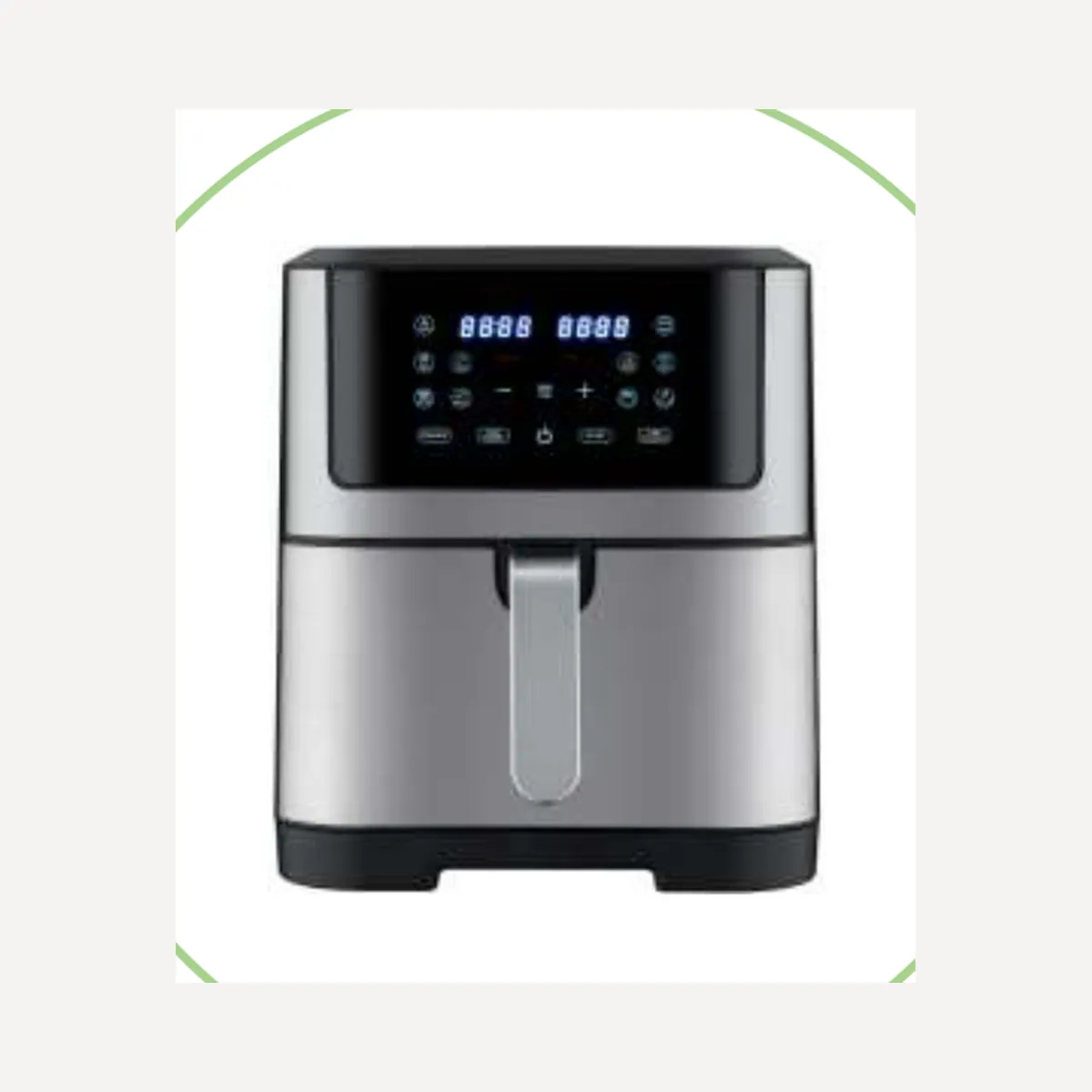
8L Digital Air Fryer with Window (RA810DS)
8-litre touch-panel air fryer with observation window and LCD, dual voltage 110 V / 220–240 V at 900/1800 W.
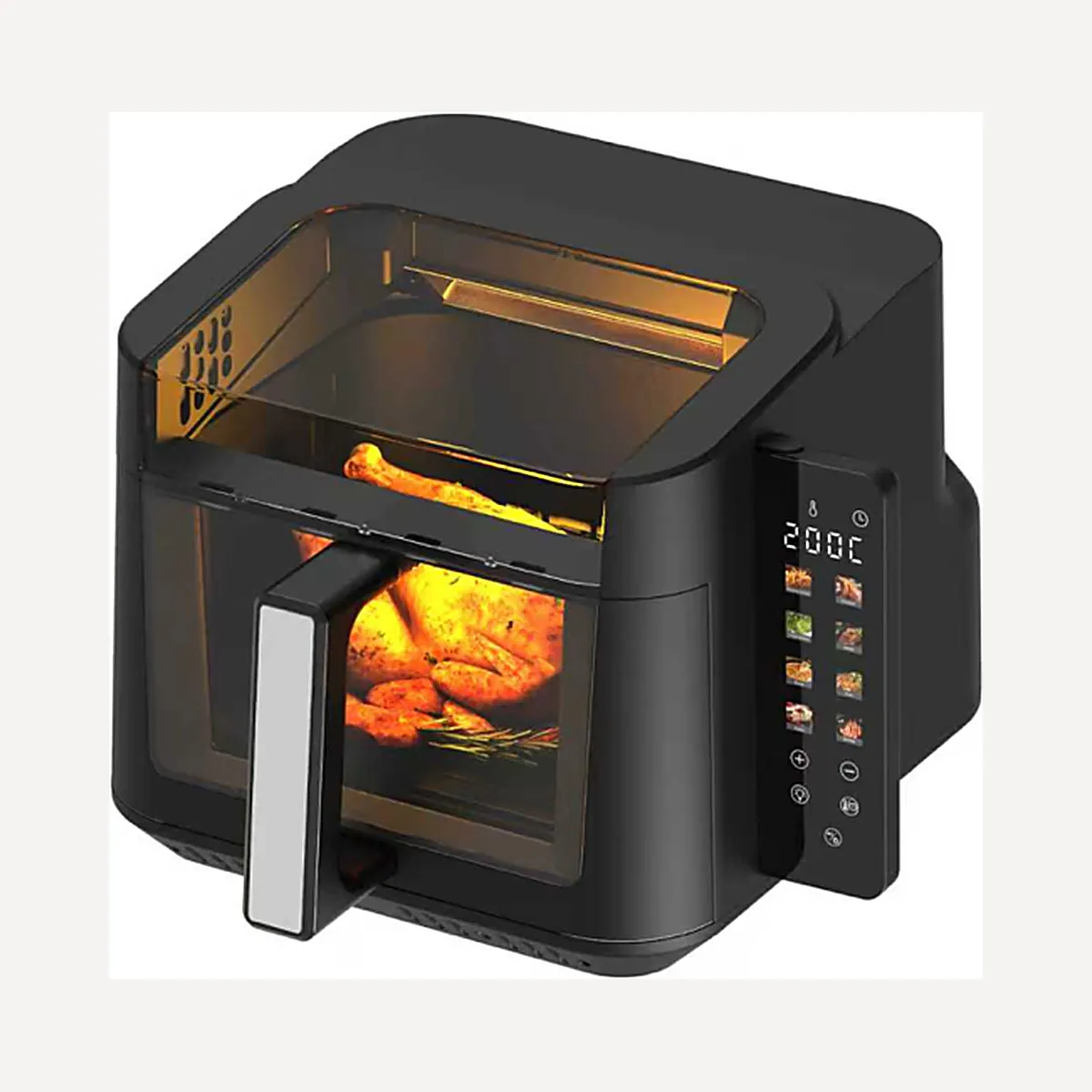
9L Dual Basket Air Fryer with Window (HTAF-905AP-D / HTAF-906AP-D)
9-litre dual-basket air fryer with fully transparent window and rear convection, 2400 W. Top of the window segment.
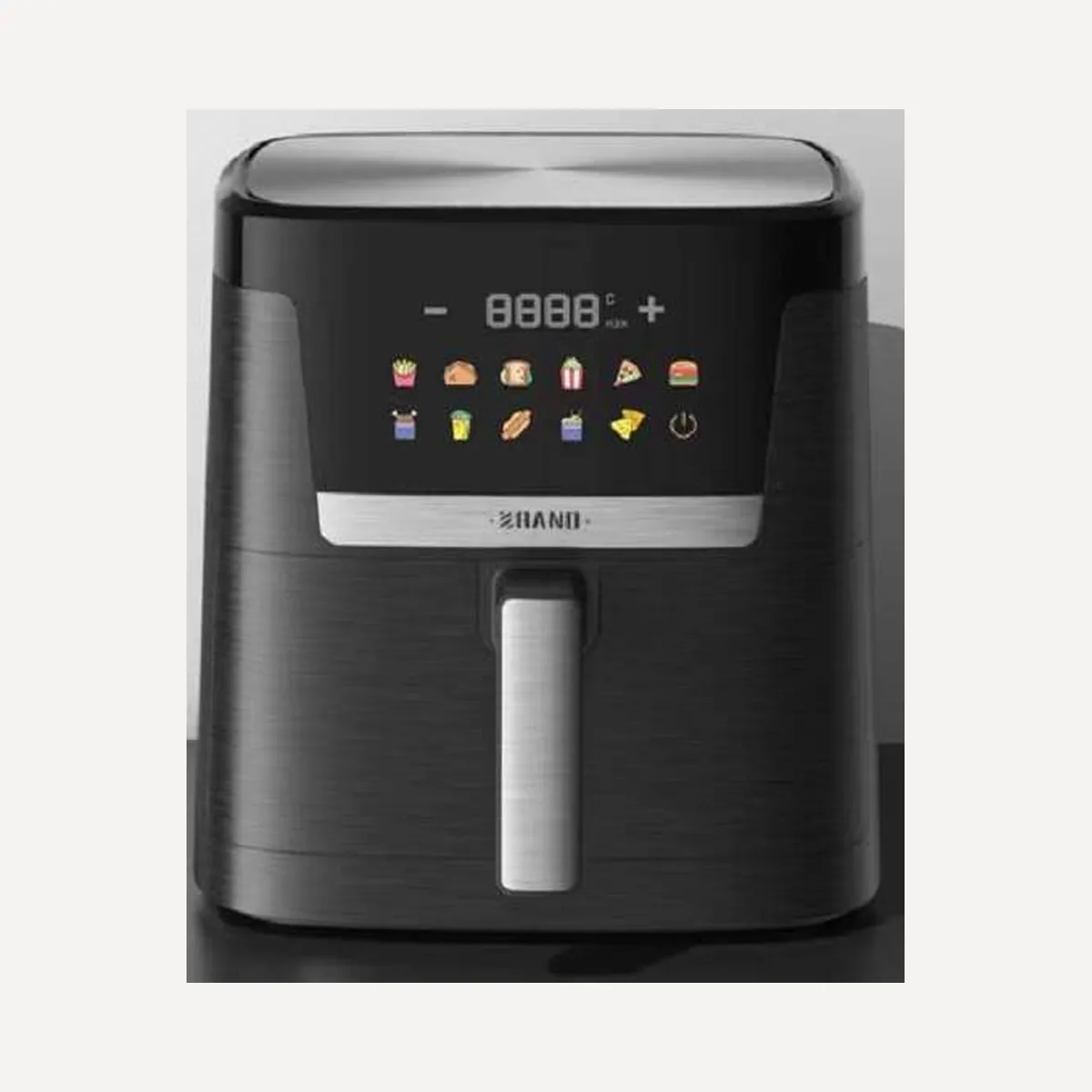
7L Digital Air Fryer (RA720D)
7-litre touch-panel air fryer with window and LCD, dual voltage 110 V / 220 V at 900/1800 W. Mid-size window model.
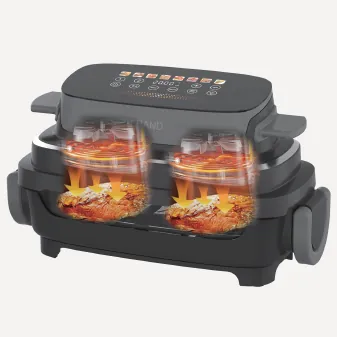
3-in-1 Glass Air Fryer (RA622GL)
3-in-1 glass-bowl air fryer, 2.2L+2.2L or full 6 L, 1100 W + 1100 W. Borosilicate-style glass bowl segment.
Window air fryers we manufacture
A cooking window is the single most requested feature in the current air-fryer cycle. Shoppers want to watch the food cook; retailers want models that demo well. Our live range covers the window segment from 4 L family entry to 9 L dual-basket hero:
- 4 L window model (HTAF-401AP-1). 1300 W, digital control, 80–200 °C — the affordable entry into the window segment.
- 6 L window model (HTAF-601AP-1). 1500 W, family capacity plus visible cooking — our documentation calls this combination out directly as the two strongest current features in one SKU.
- 7 L fully transparent model (HTAF-655AP-D). 1500 W with a rear convection motor and a fully transparent cooking window, in two documented configurations.
- 8 L touch-LCD window model (RA810DS). Touch panel, observation window, LCD display, dual-voltage 900/1800 W design.
- 9 L dual-basket window model (HTAF-905AP-D). 2400 W, fully transparent window, dual zones — the top of the window segment.
- 6 L glass-bowl model (RA622GL). Two 2.2 L zones or a full 6 L bowl at 1100 W + 1100 W — visible cooking through the bowl itself.
The window line-up
| Model page | Capacity | Documented highlights |
|---|---|---|
| 4L Air Fryer with Window HTAF-401AP-1 | 4 L | 1300 W, digital control, window segment entry |
| 6L Air Fryer with Window HTAF-601AP-1 | 6 L | 1500 W, family size plus visible cooking |
| 7L Air Fryer with Window HTAF-655AP-D | 7 L | Fully transparent window, rear convection, 1500 W |
| 8L Digital Air Fryer Window RA810DS | 8 L | Touch panel, LCD, 900/1800 W dual voltage |
| 9L Dual Basket Window HTAF-905AP-D | 9 L | 2400 W, dual baskets, fully transparent window |
| 7L Digital Air Fryer RA720D | 7 L | Touch panel, window and LCD, mid-size |
| Glass Air Fryer 6L RA622GL | 6 L | 2 × 2.2 L zones or full 6 L glass bowl |
For a side-by-side comparison of any two models, ask us for a spec sheet and we will send one for the exact pair you are weighing.
Window models versus standard models
| Aspect | Window model | Standard basket model |
|---|---|---|
| Demo and listing appeal | Strong — food visible in cycle | Relies on photography |
| Perceived generation | Current feature set | Previous cycle |
| Housing cost | Higher (glass panel, sealing) | Lower |
| Best use | Hero SKUs, launch campaigns | Volume tiers |
Window models carry a higher housing cost, which is why range planning usually pairs them: a standard model holds the volume tier while the window model takes the upgrade sale. Our basket vs oven air fryer and digital vs mechanical comparisons cover the adjacent format decisions.
Who this range fits
- E-commerce sellers build video content around the window — the cooking cycle itself becomes the product footage.
- Retail chains use window models in end-cap displays and in-store demos, where visible cooking stops shoppers.
- Private-label brands differentiate quickly in crowded listings: a window plus brand colours reads as a current-generation product.
- Gift and seasonal programmes use the glass-bowl model, which presents like a serving dish and suits premium gift boxes.
Buying notes for window programmes
- Define “transparent” precisely: fully transparent windows show the whole chamber; observation windows show part of it. Ask which design each shortlisted model uses.
- Check the rear convection option — the 7 L model pairs its window with a rear convection motor, which changes cooking behaviour and is worth testing in the sample.
- Confirm carton inserts for window models before mass production; the packing confirmation protects the glass panel in transit.
- Ask for the sync and display behaviour in writing on combination models (window + dual basket, window + LCD).
- Fix panel languages and graphics at the sampling stage — window models often carry more on-panel text.
- Plan the demo: if you sell to retail chains, request a working demo unit with your branding for store trials.
- Request pre-shipment inspection with specific attention to window sealing and glass condition; see our pre-shipment inspection guide for the checklist structure.
From enquiry to loaded container
| Step | What happens | Your input |
|---|---|---|
| 1. Shortlist | We match capacity and feature set to your brief | Capacity, market, target price |
| 2. Quotation | Itemised quote and spec sheets per model | Quantity and branding level |
| 3. Samples | Production-intent sample incl. window and inserts | Artwork and panel text |
| 4. Pilot run | Packing, carton and loading data confirmed | Sample and packaging approval |
| 5. Mass production | In-line checks incl. window fit and sealing | Inspection arrangement |
| 6. Shipment | FOB Ningbo or Shenzhen | Booking and documents |
Reference FOB prices are shown on each product page; your final price depends on quantity, configuration and current material costs.
FAQ
The questions and answers above are collected in the FAQ block of this page for reuse in buying documentation. Model-specific questions — window design details, carton inserts, dual-voltage confirmation — go to kendra@denocook.com or the contact page. The rest of the range is on the air fryer category page, and certification details per market are summarised in our air fryer certification guide.
Frequently asked questions
What window air fryer models do you manufacture?
Seven live models carry visible-cooking designs: a 4 L window model at 1300 W and a 6 L window model at 1500 W from our basket platforms, a 7 L fully transparent window model with rear convection motor at 1500 W, an 8 L touch-panel model with observation window and LCD, a 9 L dual-basket model with a fully transparent window at 2400 W, and a 6 L glass-bowl air fryer with two 2.2 L zones. Capacities cover single and family households.
Why are window air fryers growing in retail?
A cooking window removes the biggest hesitation at the point of sale: buyers cannot see what air frying actually looks like. With a window, the food is visible during the cycle, which works in store demos, in video listings and in social content. Retail buyers treat windows as the feature that separates current-generation models from older stock, and e-commerce data across the industry shows feature-led models convert better in listings.
Is a window model harder to ship or less durable?
The window is a glass or reinforced panel set into the housing, and cartons for window models are designed around it with the usual protective inserts. On our pages each window model documents its own carton and loading data. Ask us for the packing data sheet of the models on your shortlist — window models ship as normal cartons, and the insert design is part of the packing confirmation we do before mass production.
What is the difference between a window and a glass bowl?
A window model is a standard basket air fryer with a viewing panel built into the housing or lid. A glass-bowl model replaces the basket with a transparent borosilicate-style bowl, so the entire chamber is visible and the bowl doubles as a serving dish. Windows suit shoppers who want familiar air-fryer handling; glass bowls suit premium and gift positioning. Our range covers both, so you can test both in one programme.
Which plug and voltage versions are available?
Configurations are set per destination market. Several window models in the range are documented with dual-voltage designs, for example 900/1800 W configurations covering both 110–120 V and 220–240 V, which simplifies mixed-region programmes. Tell us your target market and we confirm the plug type, voltage and certification documents for each shortlisted model.
Can I combine a window with dual baskets or digital control?
Yes — our 9 L model combines a fully transparent window with dual baskets and 2400 W, and the 8 L model combines the window with a touch LCD panel. These combinations are exactly the SKUs that carry the highest feature density on a listing. If you want a combination not shown on the live pages, send us the specification and we will confirm what is possible per order.
What MOQ and customisation apply to window models?
Every window model is open for OEM and private label: logo printing, housing colour, panel graphics in your languages, colour box design and manual languages. MOQ depends on the model and customisation level — logo print on a standard colour starts lower than a full colour-and-packaging programme. Send your model, market and quantity and we will confirm MOQ in the quotation.
How do I get samples of window models?
Send the shortlist to kendra@denocook.com or via the contact page with your market and quantity. We reply with a quotation, the specification sheets and a sample plan. For window models we recommend a production-intent sample so you can judge the window sealing, panel clarity and packing inserts exactly as they will ship.
Ready to source air fryer with window manufacturer?
Send the model, target market and quantity — we reply with a quotation and sample plan.
Get a Quote